Fake News and College Students

Story and photo illustrations by Heather Hay, staff reporter

As the issue of fake news makes headlines, CNM has been providing students with the tools to debunk fake news, and now has an online guide on how to navigate information, according to instructors and library specialists.

West Side Library’s Reference Specialist Scott Reece said he had noticed fake news mentioned in the media, especially since the election.  Around the beginning of April he said he created a guide to help students evaluate resources and give instructors a tool for guiding students to critically reviewed information.

tabloid3
Reece explained that there is nothing new about fake news and that our main exposure used to be through tabloids like the Weekly World News for example. “People certainly purchased those and it is possible some people believed them, but in general, people knew it was primarily for entertainment,” he said.

What does Fake News mean?

Fake News is news that usually has these characteristics: the information is unverified, the news appeals to emotion, the authors usually are not experts, and the main idea of the story is unique and unable to be found anywhere else, according to the libguide.

It has become difficult to tell if a story is fake or real on the internet however, and it can take so many different forms, he said.  Reece said some fake news relies on reprinting regular news stories with a fantastic headline that only slightly relates to or does not relate to the story; the story could also be misleading in that it is biased or completely made up.

“But a lot of people don’t read past the headline.  They see the headline, they believe the headline and the body of the story is just there to give it a veneer of respectability when it’s fake,” he said.

Reece said that an instructor was using a really good example of a fake news website which is actually a fun creative web project, The Northwestern Tree Octopus.

“It’s a fake website that he was using to demonstrate to his class.  If you know what to look for it’s got a lot of hallmarks that it’s fake.  If you don’t know what to look for you might be convinced that there’s actually a tree octopus out their somewhere,” he said.

octopuscnm

If fake news has always been around, why are we talking about it now? 

Reece said that he thinks a big reason we are still talking about fake news is because of the last presidential election; there is still controversy over how much fake news actually affected the outcome.

He also said that television news has changed to become a 24 hour news cycle where there is a rush to get the news out and legitimate news organizations occasionally make mistakes.  He said that unfortunately leads to the creation of fake news even though a legitimate news organization will retract or correct the mistake.  This then damages the reputation of legitimate news sources in the eyes of people who were skeptical of them anyway, he said.

Journalism Instructor Jack Ehn also explained why fake news is in the media so much lately.  He said that fake news ix used as a method of distracting attention away from events or undermining accusations.  He cites Russia as an example when it spread reported that Syria used chemical weapons.

He also said that president Trump and his advisors have used fake news to undermine the media and “throw doubt into readers minds that any coverage of Trump is going to be accurate; it’s all to embarrass them.”

“So a lot of publications are kind of left leaning and I get that, and a lot of reporters and editors are left leaning and I get that, and they may not have the same mind set as people in Middle America that Trump appealed to, the disenfranchised blue collar workers and such.  I think there’s a certain amount of truth in the criticisms of the media, however there are techniques for being objective and reporters know how to do it,” he said.

He also said that it is the job of a news organization to report on conflict, which is what the relationship between the press and the government is right now; this category of news worthiness, conflict, leads journalists to hold the government to account.

“So Trump can’t discredit news organizations for doing their job, and the other problem is if he discredits them, what if [the news] reports something that’s favorable to Trump,” said Ehn.

He also said that a fundamental part of his journalism education, in his work experience and to his students, it to go out and get sources.  As a journalist, he said, “you can’t feel good about makin’ stuff up.”

Why is credible news important to college students?

College students rely on credible information for research assignments, and the confusion over what is or is not fake news can make it difficult for students to find resources, said Mary Lightfoot, English instructor at the West Side campus.

Reece said, “If you were trying to rely on a story that you thought was real but was actually fake for an assignment or a paper it could affect your grade.  If you got called on that it could be very uncomfortable for someone to learn that something they believed was true wasn’t true.”

Lightfoot said she has her classes go through a library instruction session with a librarian to explain their peer reviewed and judged resources.  She said her students are restricted to only using articles from those databases because “when you’re talking about critical thinking a reliable news source is essential.”  She also said that a librarian will know the correct words to use to find exactly what you are searching for.

Reece said that he teaches library instruction courses catered to the instructors’ catered needs, but the resource training is not limited to English 1101,1102 or IRW classes.  Recently he said he had taught a library instruction for a Sociology instructor and campus libraries can do library instructions for students learning English.

Nutrition resources checklist
The current 2015 Nutrition textbook page pictured above, says credible information comes from agencies who rely on peers of professionals to evaluate their findings.

Reece said he had recently been able help the physical assistant program at West Side with getting their accreditation approved by providing a list of credible resources for their students.   He said it was his first library instruction for a health science course, “That was fun because it’s an interest that I have its one that I haven’t been able to pursue as much because we don’t have as many programs available on this campus for that.”

College students need credible resources about health not only for assignments for their own personal use as well.  “Man there’s so much out there regarding health that is not reliable information,” said Reece.

A recent example of a study that is criticized for being biased is “The Scientific Basis of Guideline Recommendations on Sugar Intake: A Systematic Review.”  The New York Times reported that the authors of the study had close ties to companies such as Coca-Cola and Kellogg’s among others.  The New York Times reported on the history of the sugar industry’s attempts to manipulate and cast doubt on scientific studies regarding food.

On a much bigger picture, reliable news and the media plays an important function in our democracy, according to Ehn.  Fake news is calling the credibility of the media into question, and the media will live or die based on their credibility he said.

“They establish a relationship with their readers over years that their reporting fairly and honestly and even if something disagrees with their editorial policy they’ll report it honestly,” he said.

crop newspaper
Daily Albuquerque Journal is available to read at each of CNM’s campus libraries according to their catalog.

Ehn said that people used to believe that if news were in print that it was true, but now that is not the case.  “You have to have some faith that some organizations are doing the best that they can.  You can’t live in a world where nothing is believable,” he said.

Verifying sources is one of the first things a journalist is taught, he said.

Ehn explained that when he used to work for the Tribune he received an op-ed piece, which is an article of opinion written by someone not affiliated with the editors of the newspaper, from somewhere that he could not track where it came from.

He said it came from a scientist that was advocating that smoking was good for you, and so he was thinking of putting it in the lineup of op-eds, but his natural instinct as a reporter made him want to investigate where the piece had come from.

He called the author of the story and asked where the study was coming from so he could talk to the person who had done the study directly, and the author would not tell Ehn, so he would not run the story.

“If there’s someone advocating for something you always look at their background connections,” he said, “I wouldn’t use it because they are trying to plant information.  There’s a whole industry that is trained to spread that information.”

According to the Associated Press millennial college students receive a lot of their news through social media sites. This news may be misleading and according to the Wall Street Journal story on the Fake News libguide those stories can be designed to illicit clicks and limit the news you see to stories you agree with.

CNM English instructor Carly Harschlip from Montoya campus said social media has “content that is designed to push our buttons.”  She also said “I haven’t changed the way I teach about fake news because it’s always been there, but I am using the phrase now.”

Seamus O’Sullivan, Political Science and Sociology instructor said he did not necessarily address fake news, but routinely discusses reliable and authoritative sources of information and not just opinion.

“The term ‘fake news’ is sometimes not very helpful in the current political climate because it, unfortunately, has come to mean any news or information that you disagree with, not news or information that lacks supporting evidence,” he said.

What tools do students have available to find credible resources?

Databases

The CNM library subscribes to three different databases each with many different reliable news sources, you can find sources to use or verify another news source you found.  Reece said if you think a story may be fake, look and see if anybody else is reporting on the same story, and if it’s legitimate the other news outlets will be reporting on it.  You can also access the NY Times, Washington Post and several magazine subscriptions through the library’s website.

Libguides

CNM library’s libguides are web pages dedicated to guiding you through a particular task or explain a topic, and are on the library’s home page under “Research Guides.” The Fake News guide is laid out to be easy to read with quick checklists and links to reliable news sources and also graphical elements with a little something humorous said Reece.

Physical Newspapers and Magazines

All CNM libraries have physical newspapers and magazines available to read, although the title selections will vary by branch.  You can scan the articles to email them to yourself or save them on a flash drive.  The amount of back issues will vary based on the branch as well.


Nine Pieces of Advice for Women in Nontraditional Jobs.

Feature story and photos by Heather Hay

International Women’s Month may be winding down, but CNM’s lecture on Women in Nontraditional Jobs performed at the Montoya campus has provided students with lots of concrete advice for women entering the work force.

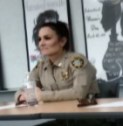
Here are nine pieces of advice from Police Captain Andrea Taylor, Fire Department Captain of the Arson Investigation Division Jackie Lance-White, and engineer and part time CNM instructor Srividya Iyer.

drivers
City Fire Department Drivers Erin Brandow and Jesse Davis were on available at the Montoya H building to answer students’ questions about getting a job.  Brandow said the CNM Fire science program is a good way to prepare yourself for becoming familiar with the equipment and concepts of fire fighting.
  1. You’re going to have to prove yourself.

Iyer said that she still has to remind men in her field that “women can do math” so remind them that you have the same experience and education as them and that yes, women are also good at math.  She said that a lot of girls grow up with society giving them a subtle put down in school that you are not smart enough to do math and science.

Iyer said she had worked with four women engineers out of 300 at Motorola in her department and there has been no increase in women engineers lately.  She said you have to prove yourself and work twice as hard.  “There is a lot of attrition.  Right off the bat there are subtle put downs that you are a woman and you cannot do it.”

She also recommends letting your hard work speak for itself.  She said “The most competent people I work with never brag about what they do.”

Taylor said the academy was hard but standards are the same for women and men so she was encouraged by her other students.  Her captain really wanted her to succeed and out of the five women in her class she was the only one left.  Currently, she said there are only about 10% women in her department and out of 320 sworn in, they have about 30.

  1. You must have passion for your work.

Lance-White said that seeing the best and worst parts of humanity is not for everybody.  “You delivery babies and you go to child rapes. It’s difficult to see that day in day out.”  She also said that the firefighter suicide rate is pretty high right now.  To be in the job you have really got to love helping people she said.

Taylor agreed with the sentiment of making your job a passion.  She said that even though the graveyard shift can be tough, but it is the best job and she can’t imagine sitting at a desk all day.

She said the “I didn’t do this job for the glamour and the glitz or driving with lights and sirens. It was to help people.”

Iyer also loves her job in engineering where she makes network equipment, routers and she was even on the design team for the razor cell phone.  She said “The most rewarding thing is building things and getting them to work.”  She also said there can be some boring mundane stuff in the beginning of your education or training, but engineering is actually a very creative job.

Dayana
Dayan Hill dropped in to hear the event out of curiosity because she is interested in learning about the careers.  She said “Each woman was different, but they shared similarities and in the end I think the message is the same; we can do it.”
  1. Have a strong support system and a way to decompress.

After long hours of stress on the job, Taylor says it’s a good idea to have separate life outside of work where you can decompress.  She said a lot of cops have ADHD and PTSD so you need a strong support system.

At home, Taylor cares for a special case rescue dog that had been abused.  “My work life balance is a lot simpler for me because when I put my hair down and I take off my uniform you would not recognize me,” she said.  When she is done with work she works out, rescues animals, gardens, reads and gets her nails done.  She says she manages her job by having balance.

Lance-White said fire department works a 48 hour shift, so it is difficult to balance a family at home.  Most of the women (25 out of 700) will try to get a job off the street and in an office so that they can balance that work life challenge.  It’s a really difficult balance and it may be why there aren’t too many women working in the fire department.  With the four days off in a row, the first is usually used to decompress.

  1. Work on your communication skills

Although typing skills  is a very important part of the job because of all the reports to write, all three women agree millennial students should work on their verbal communication skills.

Taylor has said she believes that younger officers are not communicating with the public or coworkers as well, and she suspects that it stems from their reliance on technology to talk to each other.  Iyer recommends students who go on to get a bachelor’s degree to take a course in negotiation in order to learn how to work with coworkers or negotiate your salary.

One of the things that have benefited Taylor on the force as a woman is she uses her words more than her strength.  She said women have a naturally soothing voice and “I do box, but what I have used 99% of my career is my words to talk people into handcuffs.”  She also said a lot of the suspects see their sister, mother or girlfriend and they don’t want to hurt you.

  1. But remember, as a young woman, you have a unique perspective.

Lance-White said she loves the millennials. She said “the generations are just getting so much smarter and unique in the way they approach things.”

Iyer said that she had read in an economy magazine that she “had heard that men in manufacturing jobs, because of their ego, they will not want to go and retrain themselves.  But women got up and got themselves retrained and got on with their life.”

“Women have a bigger advantage when dealing with the public because we are a little more nurturing,” said Lance-White.  She said they have the ability to network and work with other networks.  “Guys want to be the ultimate knowledge on a topic and I am OK with asking for help.”

  1. Don’t be embarrassed by your degree.

Iyer said that it is a common misconception that employers are looking only for Harvard graduates.  In actuality, companies respect students who have accomplished their training through community colleges, especially if they have had to overcome hardships to graduate.  “As long as you prove you can do the job, you can still get the job,” she said.

Lance-White said that she had learned in a Ted Talk  by Regina Hartley about the concept of the silver spoon applicant who had received all the resources they need for a career, versus the scrapper who had to “fight against tremendous odds to get to the same point.”  Hartley, a human resources specialist who performed the Ted Talk, recommends giving the person with a lot of odd jobs on a resume the chance to have an interview.

She also said that in a smaller college she was given a lot of personal attention and felt that the faculty cared about her success.  She said that she was able to learn the coping mechanisms she needed to overcome her rough childhood and make it on her own.  “If you can find that kind of environment that has incredible support, almost like a family, than you can do incredible things.”

  1. Don’t be discouraged by your difficult background.

Taylor said she grew up in around abuse and had problems with drug addiction, but her life was saved by a deputy with the Bernalillo sheriff’s department.  She also said that because of her background with drugs, she was able to be a better undercover narcotic cop while she lived in an apartment for several months as a drug buyer.  She said that no matter who you are however, she will always treat you like a human being.

She encouraged all students interested in the police department to be very honest on their questionnaires and having a drug problem may not prevent you from joining the force if you have not had a drug addiction for at least three years.

She also said she feels like having grown up made her a better cop around verbally abusive suspects.  “When I go to work I put on my uniform and I’m a deputy.  I call it my wonder woman outfit because nothing can penetrate me.  Words can’t hurt me.”

  1. Address sexual harassment instances early.

While all three speakers agree that the new generation of men is more respectful of women, there are still men from the generations before that had been working during the cultural shift in the seventies when women started entering the work force.  Iyer said she “Is confused why people talk about the good ‘ol times.  I don’t know what was so good about it.”

The speakers recommend sticking up for yourself early so that everyone knows not to treat you “like a girl.”

Lance-White said you have to teach people how to treat you.  She said she had only had to set someone straight once, but that was it and the rumor had spread that you shouldn’t mess with her.  She said by standing up for herself she made a difference and other people took notice.  It was rewarding.

  1. Encourage other women.

Taylor said when she started on the police force that she had overheard gossip or harsh words directed to each other.  Taylor believes in mentoring other women and to “challenge yourself to be the person that brings someone up instead of brings people down.”

“It’s so simple to bring people down, but I challenge you to make them a better person than when they woke up that morning,” she said.

Taylor said her coworkers often tease her and call her the therapist, and when she retires in two years at the age of 40, she intends to become a therapist once she gets her masters in mental health counseling.

jordan crop
Jordan Masters is in her second semester as a full time student at CNM after taking a five year hiatus from school. She said she had just recently learned more about wage gap in her social problems class. She said she was interested in attending the speaker event because “with me growing up it was always a competition with other women and I think it’s just important that we build ourselves up because we go so much further. We have enough against us as it is.” She plans to continue to Highlands University for her bachelors and masters degree.

Here is more information about the presenters.

taylor2
Captain Andrea Taylor

Captain Andrea Taylor has been commander for 16 years of the South Valley Area.  She received her bachelors from UNM in criminology and has a master’s in forensic psychology, working on another master’s in mental health counseling.

She started in 2001 on patrol, then promoted to detective rank where she worked undercover narcotics for five years where her specialty was cartels and methamphetamine and was the only woman working undercover in the state of NM.  In 2014 she was promoted to the captain of criminal investigations unit.

She also created the world’s first Animal Cruelty Task Force that goes out street by street looking for animal abuse.  This program has now taken off across America. “It combines my passion for animals with my passion for Law Enforcement,” she said.

iyer.jpg
Srividya Iyer

Srividya Iyer is a part time instructor at CNM, currently teaching Linux Essentials, which she said currently only has two women out of twenty students. She is an electrical engineer and has been an engineer for 20 years.   She has her own company, Caniv Tech, which does network analytics with funding from the National Science Foundation, for customers in the private and government sector.  She also does a lot of mentoring for high school and middle school students who are interested in going into the STEM field.

She said she grew up in India and came to the United States for graduate school.  What really made her interested in engineering was a physics teacher she had in high school.  “He really brought physics to life; otherwise they would just make us memorize things.  I never realized how creative one could be; he is the one who made me want to get into this field.”

White
Captain Jackie Lance-White

Albuquerque Fire Department Captain Jackie Lance-White grew up in Canada and attended a junior college before attending UNM on a softball scholarship.  She later went on to compete with the Canadian Olympic team for softball in 2000 and 2004.

At 27 she thought about being a cop, but didn’t qualify because of her Canadian citizenship, so she applied for the Fire Department.  She also attended paramedic’s school.

She highly recommends the CNM EMT class because she said about 80% of her job is medical like heart attacks and car accidents.  She taught at the academy for a little while and then went on to work in the Arson Investigation Division as Captain where she works with firefighters from both county and city departments.

She is also in post grad school with the Navy working on her Masters in Homeland Security.