The Memorial Day thunderstorm may have poured approximately two inches of rain on parts of Albuquerque, according to the weatherman. Along H Building at CNM’s Montoya Campus the influx of moisture is paying off big time in terms of extremely green grass for at least the first week of June. North of Montoya, across the arroyo, at Oso Grande State Park, it is green, almost as far as the eye can see.
It is a sunny afternoon at CNM Montoya campus, on a March day that would foster a beehive of activity during normal times but these are still COVID TIMES. The Montoya parking lots are practically bereft of cars. Outside tables, where students might ordinarily be having lunch, are vacant. Signs on the glass doors of Robert R. Barr Hall indicate that the library, within, is closed, and that assessments scheduled for March 23rd through April 5th, will be held at the CNM Main Campus. The Sandia Mountains, in in the background, send a message that there are still tasks to be completed. And the birds still chirp their songs from the bushes and trees, but garner applause from no one.
A walk around CNM’ Joseph M. Montoya Campus on a brisk, sunny November day, showed that the buildings and trees pretty much had the grounds to themselves. And the fall foliage was hanging in there.
By Hilary Broman
Senior Staff Reporter
Students are invited to take a break from their week eight stress and go pet dogs at Montoya campus.
Therapy Dog Thursday is scheduled to take place on Thursday, July 6th from 11:00 AM to 12:30 PM, in Building H, room 126.
The main mission of the event is to help CNM students let go of anxiety as they prepare for finals, said Daniel Hay, Library Circulation Specialist.
Hay will also be on hand to inform students of other helpful services and resources, he said.
“Studies have shown the stress-relieving benefit that animals have on people,” Hay said.
The dogs that will be at the event are specially trained therapy dogs.
The dogs and volunteers are from the Southwest Canine Corps of Volunteers.
The therapy dog event is the most well attended event at the library, Hay said.
This is a recurring event and it takes place at Montoya, Main and Westside libraries throughout the year.
Check the CNM library events guide upcoming dates.
Daniel Hay petting Scruffy at the Spring April 6, 2017 Therapy Dog event. Photo taken at event by Tamara Bicknell-Lombardi
CNM offers plenty of clubs for students to join and participate in. Clubs are a way for students to learn a new skill, be a part of a group of people with similar interests, or to simply relax and have a good time. Listed below are five clubs that are accepting new members for the summer term.
Club: Montoya Writing Group
When and Where: Starting June 7th, the group will meet every Wednesday through the end of July in H 129 at Montoya campus from 3:30-5:00pm.
Club activities: This group invites writers of all genres to develop their voice, cultivate a supportive creative writing community, and learn more about their craft. This summer, the creative writing group has invited local writers to share their work and lead the group through activities and exercises that will help us develop our craft, all of whom are also CNM Faculty. See below for list of scheduled presenters.
Why students should join: This group is open to students, faculty, staff, and the greater community. Our club is for anyone who has always wanted to finish that novel, play with poetry, or simply cultivate a creative outlet. No writing experience necessary! Newcomers welcome.
Contact: Maria DeBlassie, Lead Faculty of the Montoya Campus Writing Group at mdeblassie@cnm.edu
2. Club: Improv Club
When and Where: Coal Avenue Theatre at 4:30pm on Fridays
Club activities: The club practices different types of comedic Improv (improvisational acting). On occasion, they will also perform.
Why students should join: The students should join if they like to laugh and make people laugh. They should join, if they plan on a profession that requires quick thinking and team work.
Contact: Leonard Madrid, faculty mentor of Improv Club, at lmadrid35@cnm.edu
Community of Gamers: Community of Gamers gather to take a self timed photo. Photo courtesy of: Dominic Alarcon
3. Club: Community of Gamers
When and Where: Currently waiting for permanent room assignment. Contact club president for details.
Club activities: We meet up as a group in our club room and we play games, have tournaments, have group meet ups outside of school, discuss all things gaming.
Why students should join: Students should join because it’s a fun place to hang during the stressful semester to relax have fun and meet new people.
When and Where: Tuesdays from 4:30-5:30pm in MS 313 at Main campus and Fridays from 1:00pm-2:00pm in the H building commons at Montoya campus. Meetings will occur every week until the end of the summer term.
Club activities: That will depend on the level of the students who show up. We may start with the alphabet and simple conversation. If the students are more advanced, they may want to review more advanced vocabulary. Basically, we will be practicing American Sign Language.
Why students should join: It is really fun and it’s a great way to practice ASL and meet interesting people. The club may even get some deaf people to come and sign with them.
International Women’s Month may be winding down, but CNM’s lecture on Women in Nontraditional Jobs performed at the Montoya campus has provided students with lots of concrete advice for women entering the work force.
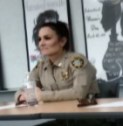
Here are nine pieces of advice from Police Captain Andrea Taylor, Fire Department Captain of the Arson Investigation Division Jackie Lance-White, and engineer and part time CNM instructor Srividya Iyer.
City Fire Department Drivers Erin Brandow and Jesse Davis were on available at the Montoya H building to answer students’ questions about getting a job. Brandow said the CNM Fire science program is a good way to prepare yourself for becoming familiar with the equipment and concepts of fire fighting.
You’re going to have to prove yourself.
Iyer said that she still has to remind men in her field that “women can do math” so remind them that you have the same experience and education as them and that yes, women are also good at math. She said that a lot of girls grow up with society giving them a subtle put down in school that you are not smart enough to do math and science.
Iyer said she had worked with four women engineers out of 300 at Motorola in her department and there has been no increase in women engineers lately. She said you have to prove yourself and work twice as hard. “There is a lot of attrition. Right off the bat there are subtle put downs that you are a woman and you cannot do it.”
She also recommends letting your hard work speak for itself. She said “The most competent people I work with never brag about what they do.”
Taylor said the academy was hard but standards are the same for women and men so she was encouraged by her other students. Her captain really wanted her to succeed and out of the five women in her class she was the only one left. Currently, she said there are only about 10% women in her department and out of 320 sworn in, they have about 30.
You must have passion for your work.
Lance-White said that seeing the best and worst parts of humanity is not for everybody. “You delivery babies and you go to child rapes. It’s difficult to see that day in day out.” She also said that the firefighter suicide rate is pretty high right now. To be in the job you have really got to love helping people she said.
Taylor agreed with the sentiment of making your job a passion. She said that even though the graveyard shift can be tough, but it is the best job and she can’t imagine sitting at a desk all day.
She said the “I didn’t do this job for the glamour and the glitz or driving with lights and sirens. It was to help people.”
Iyer also loves her job in engineering where she makes network equipment, routers and she was even on the design team for the razor cell phone. She said “The most rewarding thing is building things and getting them to work.” She also said there can be some boring mundane stuff in the beginning of your education or training, but engineering is actually a very creative job.
Dayan Hill dropped in to hear the event out of curiosity because she is interested in learning about the careers. She said “Each woman was different, but they shared similarities and in the end I think the message is the same; we can do it.”
Have a strong support system and a way to decompress.
After long hours of stress on the job, Taylor says it’s a good idea to have separate life outside of work where you can decompress. She said a lot of cops have ADHD and PTSD so you need a strong support system.
At home, Taylor cares for a special case rescue dog that had been abused. “My work life balance is a lot simpler for me because when I put my hair down and I take off my uniform you would not recognize me,” she said. When she is done with work she works out, rescues animals, gardens, reads and gets her nails done. She says she manages her job by having balance.
Lance-White said fire department works a 48 hour shift, so it is difficult to balance a family at home. Most of the women (25 out of 700) will try to get a job off the street and in an office so that they can balance that work life challenge. It’s a really difficult balance and it may be why there aren’t too many women working in the fire department. With the four days off in a row, the first is usually used to decompress.
Work on your communication skills
Although typing skills is a very important part of the job because of all the reports to write, all three women agree millennial students should work on their verbal communication skills.
Taylor has said she believes that younger officers are not communicating with the public or coworkers as well, and she suspects that it stems from their reliance on technology to talk to each other. Iyer recommends students who go on to get a bachelor’s degree to take a course in negotiation in order to learn how to work with coworkers or negotiate your salary.
One of the things that have benefited Taylor on the force as a woman is she uses her words more than her strength. She said women have a naturally soothing voice and “I do box, but what I have used 99% of my career is my words to talk people into handcuffs.” She also said a lot of the suspects see their sister, mother or girlfriend and they don’t want to hurt you.
But remember, as a young woman, you have a unique perspective.
Lance-White said she loves the millennials. She said “the generations are just getting so much smarter and unique in the way they approach things.”
Iyer said that she had read in an economy magazine that she “had heard that men in manufacturing jobs, because of their ego, they will not want to go and retrain themselves. But women got up and got themselves retrained and got on with their life.”
“Women have a bigger advantage when dealing with the public because we are a little more nurturing,” said Lance-White. She said they have the ability to network and work with other networks. “Guys want to be the ultimate knowledge on a topic and I am OK with asking for help.”
Don’t be embarrassed by your degree.
Iyer said that it is a common misconception that employers are looking only for Harvard graduates. In actuality, companies respect students who have accomplished their training through community colleges, especially if they have had to overcome hardships to graduate. “As long as you prove you can do the job, you can still get the job,” she said.
Lance-White said that she had learned in a Ted Talk by Regina Hartley about the concept of the silver spoon applicant who had received all the resources they need for a career, versus the scrapper who had to “fight against tremendous odds to get to the same point.” Hartley, a human resources specialist who performed the Ted Talk, recommends giving the person with a lot of odd jobs on a resume the chance to have an interview.
She also said that in a smaller college she was given a lot of personal attention and felt that the faculty cared about her success. She said that she was able to learn the coping mechanisms she needed to overcome her rough childhood and make it on her own. “If you can find that kind of environment that has incredible support, almost like a family, than you can do incredible things.”
Don’t be discouraged by your difficult background.
Taylor said she grew up in around abuse and had problems with drug addiction, but her life was saved by a deputy with the Bernalillo sheriff’s department. She also said that because of her background with drugs, she was able to be a better undercover narcotic cop while she lived in an apartment for several months as a drug buyer. She said that no matter who you are however, she will always treat you like a human being.
She encouraged all students interested in the police department to be very honest on their questionnaires and having a drug problem may not prevent you from joining the force if you have not had a drug addiction for at least three years.
She also said she feels like having grown up made her a better cop around verbally abusive suspects. “When I go to work I put on my uniform and I’m a deputy. I call it my wonder woman outfit because nothing can penetrate me. Words can’t hurt me.”
Address sexual harassment instances early.
While all three speakers agree that the new generation of men is more respectful of women, there are still men from the generations before that had been working during the cultural shift in the seventies when women started entering the work force. Iyer said she “Is confused why people talk about the good ‘ol times. I don’t know what was so good about it.”
The speakers recommend sticking up for yourself early so that everyone knows not to treat you “like a girl.”
Lance-White said you have to teach people how to treat you. She said she had only had to set someone straight once, but that was it and the rumor had spread that you shouldn’t mess with her. She said by standing up for herself she made a difference and other people took notice. It was rewarding.
Encourage other women.
Taylor said when she started on the police force that she had overheard gossip or harsh words directed to each other. Taylor believes in mentoring other women and to “challenge yourself to be the person that brings someone up instead of brings people down.”
“It’s so simple to bring people down, but I challenge you to make them a better person than when they woke up that morning,” she said.
Taylor said her coworkers often tease her and call her the therapist, and when she retires in two years at the age of 40, she intends to become a therapist once she gets her masters in mental health counseling.
Jordan Masters is in her second semester as a full time student at CNM after taking a five year hiatus from school. She said she had just recently learned more about wage gap in her social problems class. She said she was interested in attending the speaker event because “with me growing up it was always a competition with other women and I think it’s just important that we build ourselves up because we go so much further. We have enough against us as it is.” She plans to continue to Highlands University for her bachelors and masters degree.
Here is more information about the presenters.
Captain Andrea Taylor
Captain Andrea Taylor has been commander for 16 years of the South Valley Area. She received her bachelors from UNM in criminology and has a master’s in forensic psychology, working on another master’s in mental health counseling.
She started in 2001 on patrol, then promoted to detective rank where she worked undercover narcotics for five years where her specialty was cartels and methamphetamine and was the only woman working undercover in the state of NM. In 2014 she was promoted to the captain of criminal investigations unit.
She also created the world’s first Animal Cruelty Task Force that goes out street by street looking for animal abuse. This program has now taken off across America. “It combines my passion for animals with my passion for Law Enforcement,” she said.
Srividya Iyer
Srividya Iyer is a part time instructor at CNM, currently teaching Linux Essentials, which she said currently only has two women out of twenty students. She is an electrical engineer and has been an engineer for 20 years. She has her own company, Caniv Tech, which does network analytics with funding from the National Science Foundation, for customers in the private and government sector. She also does a lot of mentoring for high school and middle school students who are interested in going into the STEM field.
She said she grew up in India and came to the United States for graduate school. What really made her interested in engineering was a physics teacher she had in high school. “He really brought physics to life; otherwise they would just make us memorize things. I never realized how creative one could be; he is the one who made me want to get into this field.”
Captain Jackie Lance-White
Albuquerque Fire Department Captain Jackie Lance-White grew up in Canada and attended a junior college before attending UNM on a softball scholarship. She later went on to compete with the Canadian Olympic team for softball in 2000 and 2004.
At 27 she thought about being a cop, but didn’t qualify because of her Canadian citizenship, so she applied for the Fire Department. She also attended paramedic’s school.
She highly recommends the CNM EMT class because she said about 80% of her job is medical like heart attacks and car accidents. She taught at the academy for a little while and then went on to work in the Arson Investigation Division as Captain where she works with firefighters from both county and city departments.
She is also in post grad school with the Navy working on her Masters in Homeland Security.
CNM promotes Women’s History Month, March, by hosting a talk about women rarely mentioned in history books, and to acknowledge the struggle women still face today to be heard, according to part time faculty sociology teacher Xeturah Woodley.
Nora Nixon, full time instructor and Chair of ESL: Integrative Reading and Writing, attended the event. She said she had heard that some schools had closed on Women’s Day, but that she was glad CNM was open and offering this lecture. She was texting her daughter, who attends college in San Jose, to wish her a happy International Women’s Day.
The talk on March 8th, began with an overview of a recent senate session that involved the suppression of a woman senator’s voice and provided an important current example, said Woodley.
US Senate Majority Leader Mitch McConnell attempted to silence US Senator Elizabeth Warren by cutting her off during a speech she was giving on Feb 7th 2017, said Woodley.
Warren had attempted to read a letter from Corretta Scott King , because the letter had expressed her opposition to a nomination to a federal judgeship in 1986, she said.
However, after senator Warren was not allowed to speak, four of her male colleagues, two from New Mexico, were allowed to speak and they were permitted to read the exact same letter without being shut down, she said.
“I’m glad that they were able to use their male privilege in service of the vision of giving the women a voice. But the idea that they had to use it because she was silenced is disturbing,” said Woodley.
Woodley went on to say that later that day Senator McConnell explained his actions stating the following “She was warned, she was given an explanation, nevertheless she persisted.”
“This happened February 7th, 2017. People are always amazed when we talk about women not having equal voice and the continuation of gender disparity and gender oppression in 2017,” said Woodley.
Woodley explained how women throughout history have challenged oppression, and she highlighted eight women and gave sources on where to learn more about them, her links are provided.
Woodley mentioned influential Navajo Nation member Annie Dodge Wauneka who received many honors during her career and served on the advisory board for the surgeon general, and the US public health services, she said. Her most prestigious honor was the presidential Medal of Freedom, the highest civil honor conferred by the president in peace time from President Lyndon B Johnson in 1963, said Woodley.
Woodley also talked about Wangari Maathai, an environmental activist that founded the greenbelt movement in 1970s. She said Maathai became the first African woman to receive the Nobel peace prize in 2004 for her contribution to sustainable development, democracy and peace.
A book about Malala was on display at the Montoya library for the day. Woodley said The Taliban’s attempt to kill Malala received worldwide condemnation and led to protests across Pakistan; in the weeks after the attack, over 2 million people signed a right to education petition.
Malala Yousafzai a spokesperson for Girls Rights to Education, survived a gunshot wound through her head, neck and shoulders from a Taliban member she said.
Woodley quoted Malala “Today we all know education is our basic right, not just in the west, Islam too has given us this right. Islam says every girl and everybody should go to school. In the Koran it says that God wants us to have knowledge.”
Woodley encouraged attendants to share on social media what they had learned at today’s talk by using the hashtag “Be Bold for Change,” because according to a quote by civil rights activist Audre Lorde ”Your silence will not protect you.”
Attendants walked around the room and viewed posters promoting International Women’s Day. Sonia Crawford (seated in the center), full time faculty, assigned her class the Adobe Illustrator project a week ago. The Digital Design Studio class (CIS 2375) is the only advanced illustrator class at CNM, she said.
Amanda Vital, academic technical assistant at Montoya Campus, said she had been organizing the events for International Women’s Day at Montoya for the last two months and was cutting red for students to wear. She said they represent female empowerment. Willie Smoker, administrative technical assistant for TRIO, videotaped the event.